
Albania’s extraordinary biodiversity is a shared European asset. Europe must recognise its value, understand it as part of our common future and act decisively to protect it.
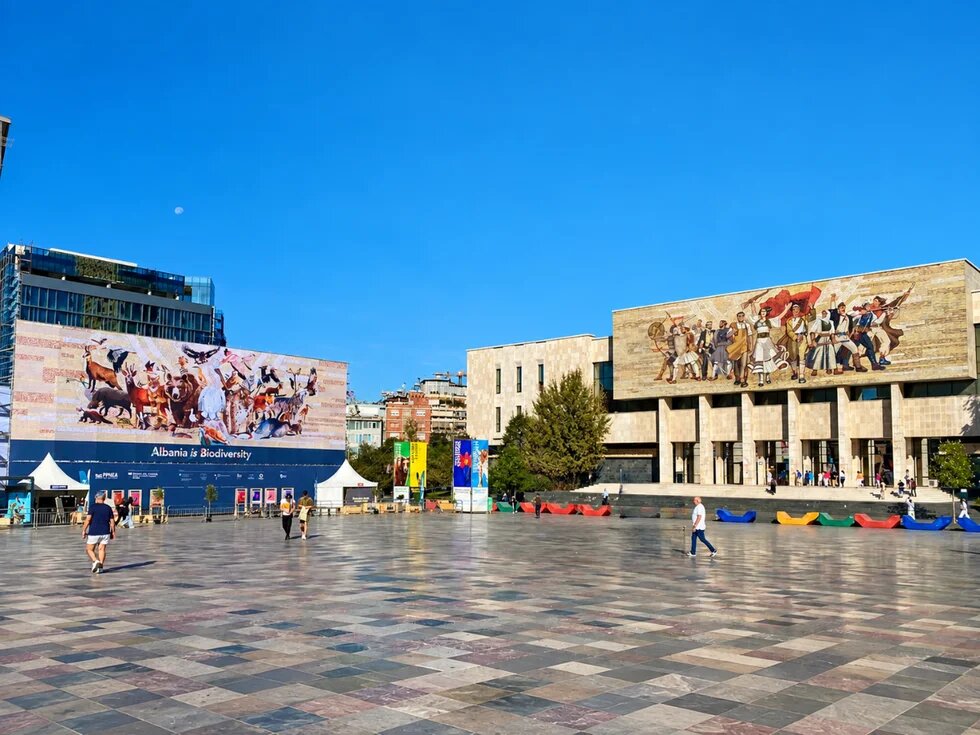
At the heart of Tirana, 38 remarkable and threatened species have taken monumental form. Presented on Skanderbeg Square, the new glass mosaic of the Albania Is Biodiversity campaign makes visible something Europe has yet to fully recognise: Albania is one of the continent’s great ecological treasures.
Biodiversity sustains the natural systems on which all life depends. Plants, animals and microorganisms keep ecosystems functioning, secure our food supply and provide clean air and water. Biodiversity is not a luxury. It is the foundation of our existence.
Yet European nature is in deep crisis. According to the European Environment Agency, 81 per cent of habitats assessed under EU nature legislation are in poor or bad conservation status. Wetlands, dunes and coastal ecosystems are under particular pressure. Intensive land use, urbanisation, infrastructure development, pollution and climate change are fragmenting ecosystems and accelerating the loss of species and habitats.
Across much of Europe, this damage has accumulated over generations, leaving natural habitats smaller, more isolated and less resilient. However, this is not the whole European story. The Balkans still contain landscapes of a scale, continuity and diversity that have become rare elsewhere. We therefore need a new narrative for this region. The Balkans are not merely Europe’s periphery. They preserve something that Europe increasingly lacks and needs for its future.
This is precisely why Albania matters.
Albania covers only 28,748 square kilometres, less than 0.3 per cent of Europe’s surface area. Yet it contains an extraordinary concentration of plant and animal life. More than 350 bird species have been recorded here. The country provides habitats for emblematic and endangered species ranging from the Balkan lynx and Egyptian vulture to the Dalmatian pelican and Mediterranean monk seal. Albania is an ecological powerhouse for Europe.
The country owes this richness to the remarkable variety of its landscapes and climate zones. Mediterranean and Central European influences overlap. Mountains rise steeply from the Adriatic and Ionian coasts. Free-flowing rivers, ancient forests, alpine meadows, lakes, wetlands and lagoons form a connected mosaic of life.
Albania also lies on the Adriatic Flyway, a key migration route between northern Europe and Africa. Migratory birds depend on its wetlands and lagoons to rest and feed during their long journeys. These places form part of an ecological network that extends far beyond national borders.
Yet Albania’s natural wealth is by no means secure in the long term. Speculative real estate investment, tourism development insufficiently guided by environmental considerations, the increasingly intensive use of natural areas and climate change are placing its coasts, rivers, wetlands and mountain landscapes under growing pressure. Albania still has the opportunity to preserve what, across much of Europe, can now be recovered only through complex and costly ecological restoration.
Together with PPNEA, Albania’s oldest nature conservation organisation and BirdLife International’s Partner in the country, we launched Albania Is Biodiversity in 2023. The campaign stands for a new way of understanding Albania and the Balkans.
For the campaign, artist Kleidi Eski brought Albania’s remarkable and threatened species together in a reinterpretation of the iconic mosaic on the façade of Tirana’s National Historical Museum. The image first appeared in 2023 as a temporary intervention on Skanderbeg Square. It has now been transformed into a monumental glass mosaic.
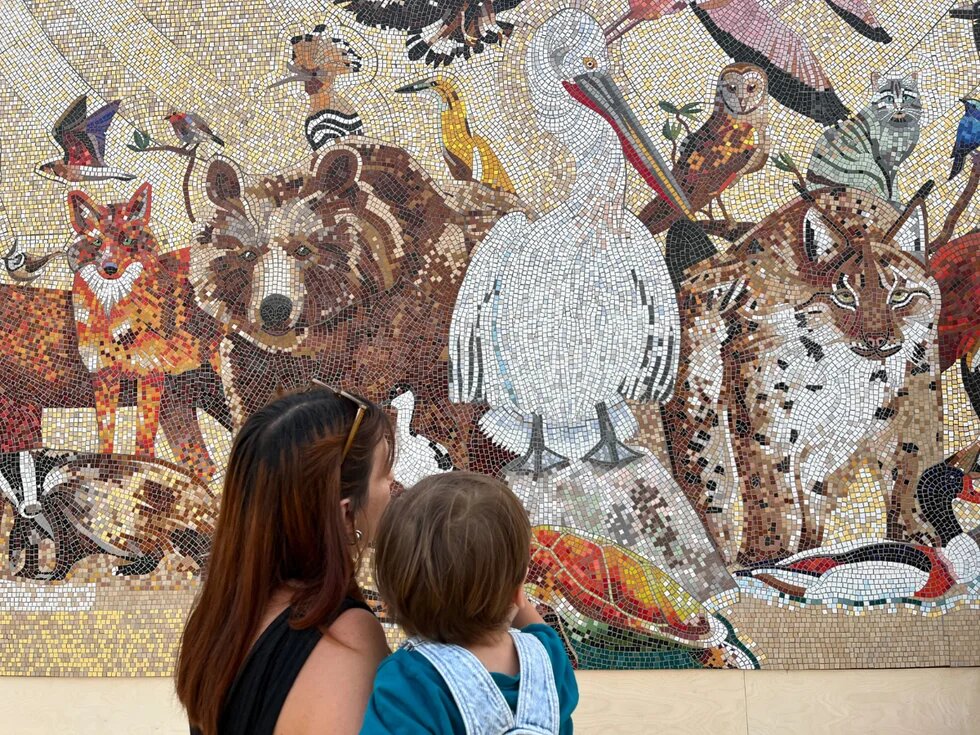
Hundreds of thousands of individual pieces come together to create a single image of interdependence. Like an ecosystem, the work draws its strength from the interplay of different elements. It invites us to see Albania and the Balkans with new eyes.
European integration cannot simply mean that candidate countries adapt to Europe. Europe must also recognise what these countries contribute to our shared future. Albania brings free-flowing rivers, ancient forests, coastal wetlands, local knowledge and extraordinary biodiversity. These values belong at the heart of European integration. Europe will prove the credibility of its green and democratic promises not only in its current member states, but in how it recognises and protects the natural commons of future members.
The accession process offers practical means to translate this principle into policy. European environmental standards should apply throughout that process. The cumulative effects of infrastructure and tourism investments on ecosystems must be carefully assessed. Independent local conservation organisations need reliable support, and intact habitats should be protected before their loss makes costly restoration necessary.
Implementing this agenda requires lasting partnerships, strong and accountable institutions, scientific cooperation and regional policies that combine economic opportunity with the protection of nature. It also means ensuring that the communities and organisations caring for these landscapes have a voice in the decisions shaping their future.
Albania is not simply on its way to Europe. Ecologically, it has always been at its heart. Albania Is Biodiversity. And Albania’s biodiversity is a European responsibility.