Har(d)vesting: On handling olive trees in the Lands of Lukova
Author: Mattia Pagni, University of Siena, Italy
Photos: Mattia Pagni, Nikolas Pipero, Fisnik Egër; frames from the ethnographic film “Of Olive Trees, of Land, and of the Future”
23 July 2026
Located on the steep hillsides that seem to fall sheer into the sea, the village of Lukova is crossed by a road that follows the lines of the land: one curve toward the coast, another into the recesses of the slope. This road, which appears to cut through the landscape, gives substance to a voice that knows the land, the history that has passed through it, and the forms of knowledge and practice that have shaped it.
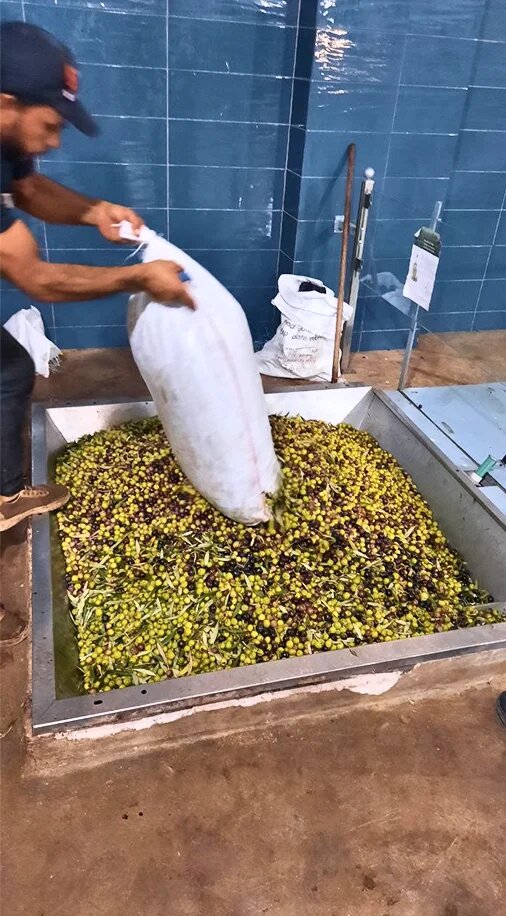
Olives at the mill
Below the road, 22,000 century-old olive trees appear scattered across the ground. Above it, instead, 60,000 olive trees follow the hilly gradient, arranged in rows and series. At times, they seem to draw the landscape according to the logic of points, lines, and spaces found in morphological maps, embodying the institutional order of the agricultural policies of the socialist regime.
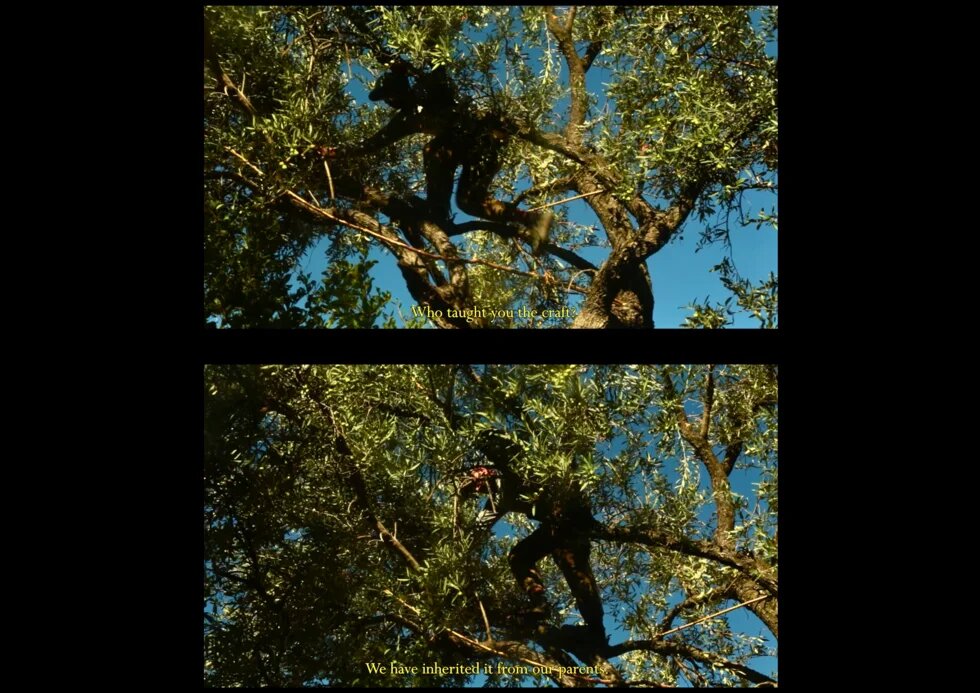
Harvesting olives - frame from “Of Olive Trees, of Land, and of the Future”
In the passage from land to trees, and from trees to oil, there is nothing “natural”: even the shape of the olive trees changes according to the way they are cared for. Through these passages, different aesthetics, styles, techniques, and purposes take form. Some practices follow one another, others alternate; some replace previous ones, while others resist the attempt to be replaced. Different structures of meaning thus enter into struggle over the definition of what it means to produce (extra virgin) olive oil.
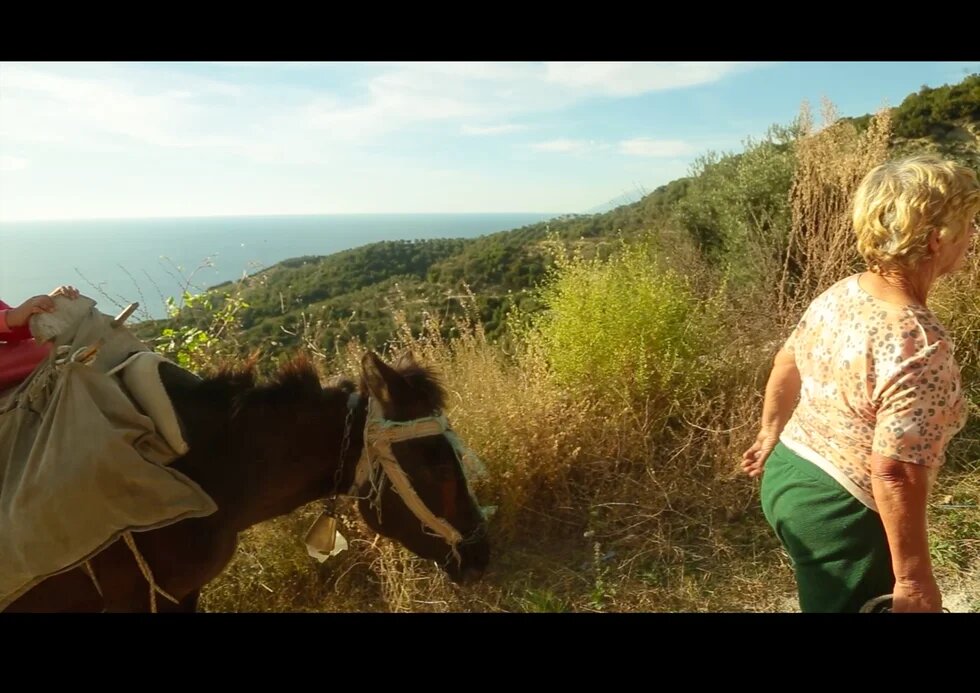
Climbing up the hills of Lukova - frame from “Of Olive Trees, of Land, and of the Future”
In Lukovë, where the landscape is increasingly shaped by privatization and the pressures of tourism, M. has learned that survival means understanding the forces at play. On the one hand, he is forced to do so; on the other, he chooses to take part in the global flow of machines, ideas, and “universals”, drawing on local knowledge in order to challenge the very way in which oil is produced.
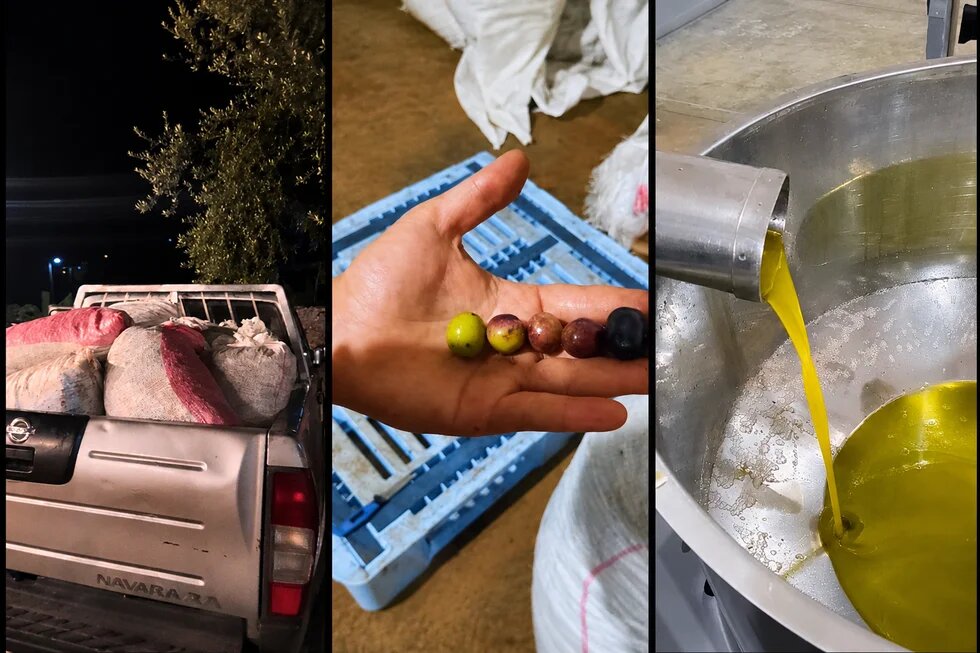
Harvesting the olive (oil)
His is a form of local resistance that, rather than separating the land from its inhabitants, seeks to extend and strengthen their interrelations. It is a resistance that, on a broader scale, enters into competition with big corporations and state projects that would turn Lukova into a territory ready to be consumed, where its inhabitants become functional elements within profit-driven logics that benefit only a few.
Locality at large: the global flow of production
!This story is produced in the framework of the International Seasonal School in Social and Cultural Anthropology (ISSSCA) organized by the House of Anthropology - Centre for Research in Social and Cultural Anthropology (QSASK) in collaboration with Heinrich Böll Stiftung, Tirana Office.