
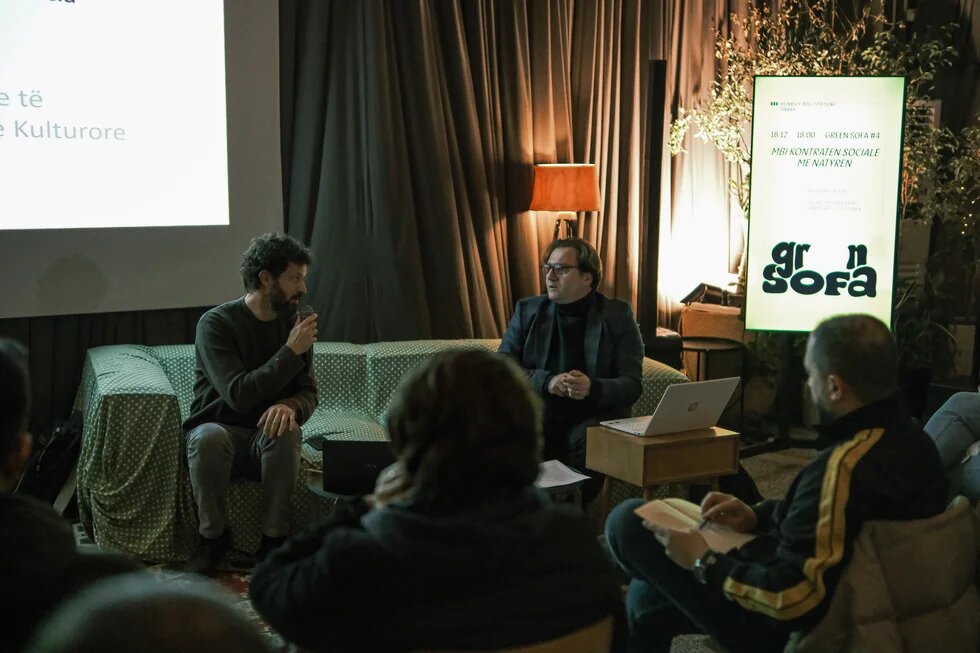
Green Sofa Reflections
As ecological crises deepen and struggles over land, water, and natural resources intensify, questions about the relationship between communities, nature, and the state have become increasingly urgent. Through the lens of anthropological theory, combined with historical and contemporary example, Green Sofa #4 explored the commons as a site of collective life and asked what kind of social contract with nature might be possible today.
Moderated by Assoc. Prof. Olsi Lelaj, this edition of Green Sofa opened with a broader question: can a new social pact between humans and nature be imagined in the context of ecological crisis and the modern state?
The discussion explored both the necessity and the possibility of renewing the relationship between humans and nature. Approaching the question from an anthropological perspective, it considered whether the commons might provide a foundation for more democratic forms of society, culture, and ecology, while reflecting on ways of life that secure dignity for both human and more-than-human life.
Rather than approaching ecological crisis solely as an environmental problem, the conversation considered it as a question of social relations, political authority, and collective responsibility. The commons emerged as a key framework through which to rethink the relationship between communities, nature, and the state, opening a broader reflection on what a social contract with nature might mean today.
The State, the Village and the Commons
Drawing from his extensive research in legal anthropology, common property regimes, and the relationship between the state and the rural communities, the anthropologist and researcher Prof. Dr. Nebi Bardhoshi examined the historical position of the Albanian village and its systems of shared ownership over land, forests, water, and pastures.
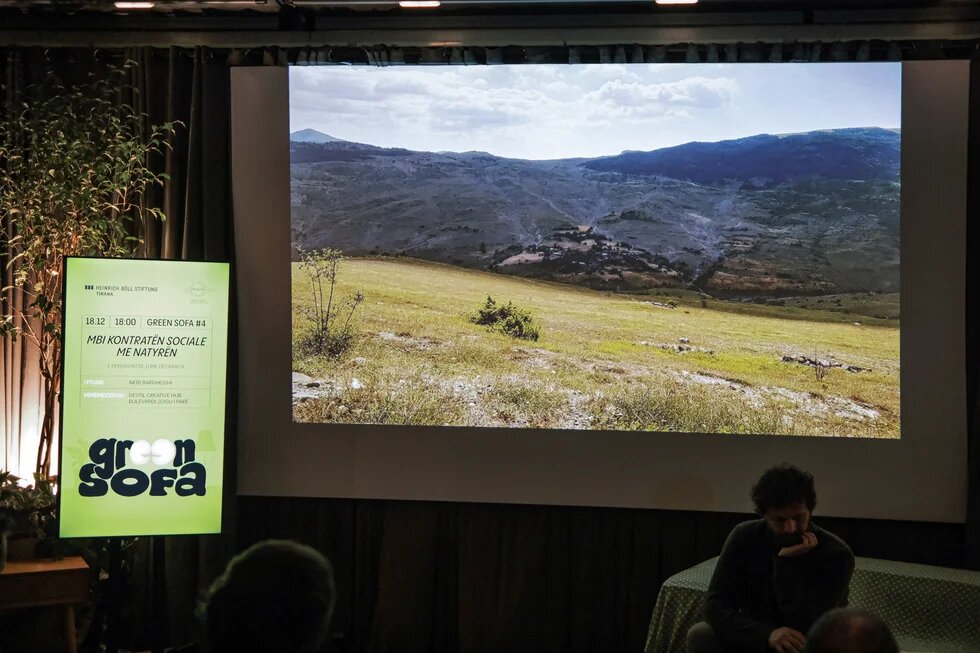
Particular attention was given to the legal and political status of common property, positioned between res nullius (belonging to no one) and village commons managed collectively by local communities. Through customary legal traditions and communal forms of governance, villages historically regulated the collective use of land, forests, water, and pastures according to principles of reciprocity, equality, and intergenerational responsibility. These practices, Bardhoshi argued, reveal alternative ways of organizing social and ecological life.
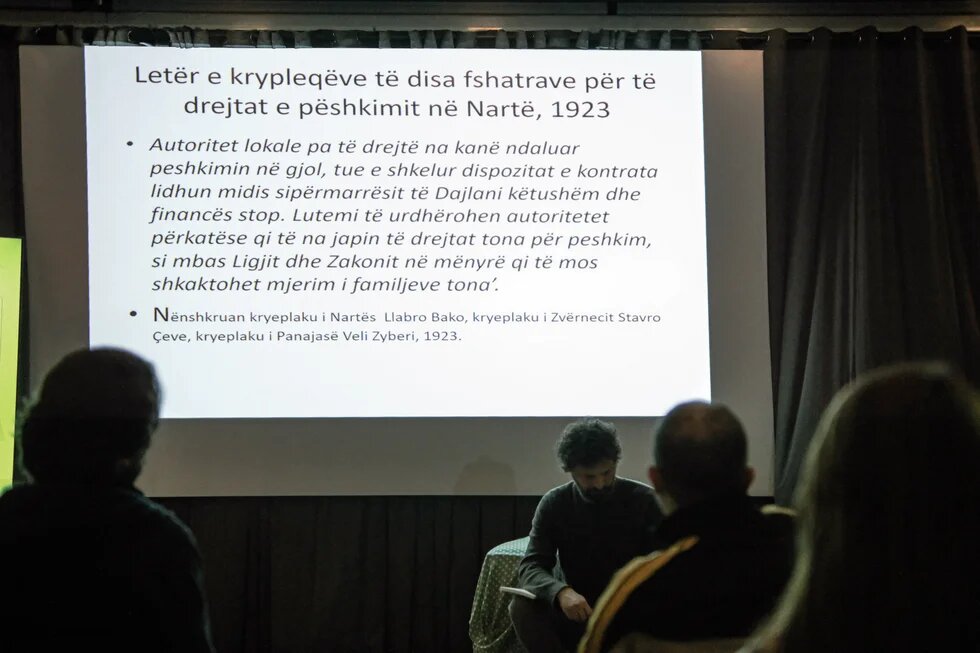
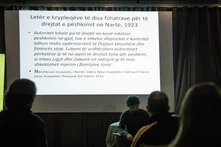
Historical records offer insight into how communities defended these rights. In 1923, the heads of Zvernec, Panaja, and Narta villages petitioned local authorities after restrictions were imposed on their fishing rights in Narta Lagoon, in Vlora. They argued that their community’s right of access to shared resources, such as the lagoon, was grounded in both the customary and legal frameworks of the time. Their appeal illustrates a long history of rural communities contesting concessions, privatization, and the transfer of common resources to third parties.
The discussion traced how these tensions have persisted into the present. As development projects increasingly reshape local environments, decisions about land, water, and other shared resources have moved away from local communities and into the hands of state institutions and private companies. Through concession agreements and other state-led approaches, authority over common resources has often been transferred from communities to external actors, reshaping long-standing systems of collective ownership and local decision-making.
Rivers, Rights, and Environmental Justice
While the commons provide one way of understanding collective rights and responsibilities, rivers offer a particularly revealing lens through which these questions become visible in practice. More than a natural asset, the river was presented as both a community resource and a common good, sustaining human and more-than-human life alike. From this perspective, rivers are not simply resources to be managed but living elements of the broader more-than-human world within which human societies exist. As the ecologist and philosopher Dr. David Abram argues:
Human life is necessarily embedded in and indeed dependent upon a wider world of animals, plants, rivers, landscapes, and ecological relationships that both sustain and exceed us.
The discussion further examined how development policies and concession agreements are reshaping shared environments and redefining relationships between communities, nature, and the state. As both ecological systems and shared social spaces, rivers reveal many of the tensions that emerge when competing understandings of ownership, development, and public interest collide. In Albania, these tensions have become particularly visible in conflicts over hydropower projects, where disputes over rivers have raised broader questions about democratic decision-making, environmental justice, and who has the authority to determine the future of shared environments.
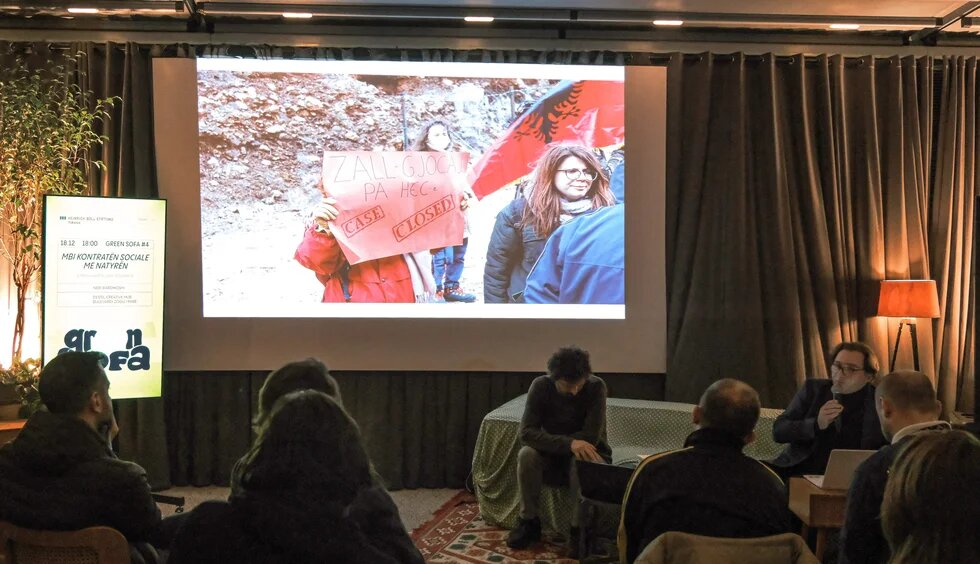
Through the case of the Flym River in Zall-Gjoçaj, the conversation examined conflicts surrounding the construction of small hydropower plants and the broader consequences of extractive energy policies across Albania and the Western Balkans. The case revealed how environmental struggles are simultaneously struggles over democracy, legality, and recognition, as local communities confront institutions that frequently treat rivers and landscapes as resources to be administered rather than living environments embedded in collective memory and everyday life.
For residents of Zall-Gjoçaj, the conflict was about far more than a development project. Having relied on the river for generations, many experienced the hydropower scheme as a form of dispossession that severed long-standing relationships between community and landscape. Water was understood not only as a natural resource but as an essential condition of life, livelihood, and belonging. Residents also emphasized that it was the community itself, often without state support, that had protected the surrounding ecosystem over generations, reinforcing their sense of responsibility toward the river and its future.
The discussion further reflected on the emergence of new forms of solidarity and environmental activism organized around the protection of rivers and the commons. In the case of Zall-Gjoçaj, local residents, activists, researchers, and legal advocates formed what Bardhoshi described as a “community of the river,” united not through political ideology but through a shared concern for water, survival, and the future of local ecosystems. Through protests, legal action, public debate, and research, these movements contributed to the emergence of a broader culture of river protection grounded in environmental rights, political action, and critical and creative forms of activism that combine local and universal languages of resistance.
Between Development and a New Pact with Nature
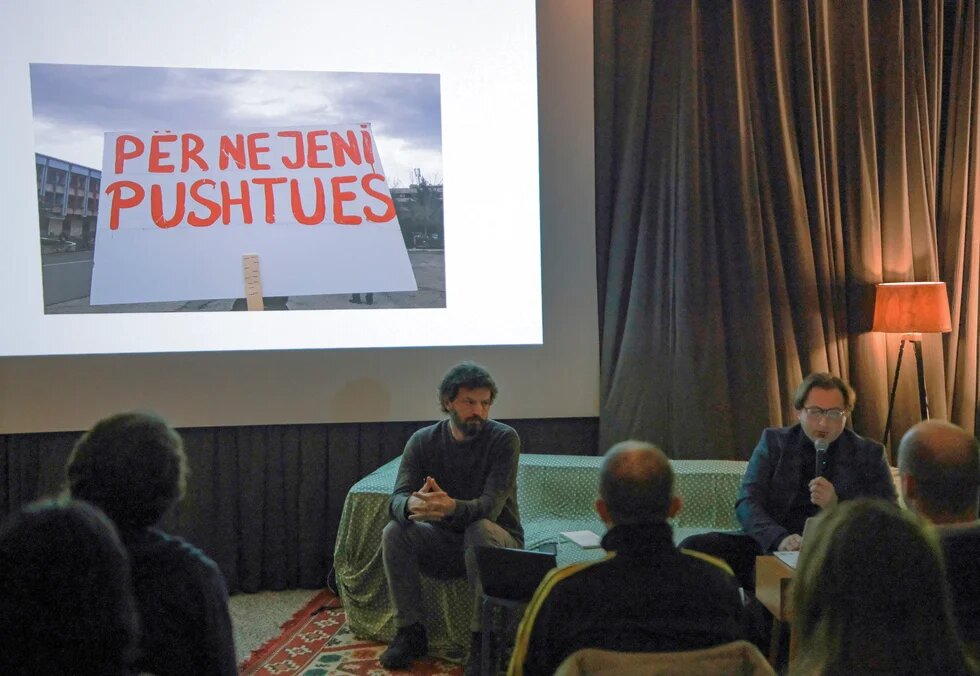
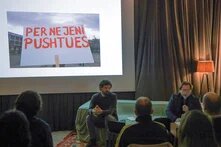
The slogans used during the protest, such as “To us, you are occupiers!” and “Ecocide”, were presented as powerful expressions of the community’s confrontation with the state. As Bardhoshi suggested, such slogans function as collective cries of mourning, similar to rituals of lamentation, through which citizens grieve the loss and denial of their rights. At the same time, they reveal an anthropological interpretation of the state as an occupying force that returns to the village not to support development but to appropriate natural resources without recognizing community rights.
These conflicts are not unique to Albania. Similar questions concerning ownership, sovereignty, and state authority have been examined by anthropologists. In her work on ownership, sovereignty, and the law in India (2022), Prof. Dr. Kriti Kapila argues that states often legitimize forms of occupation through legal mechanisms by declaring lands and resources “nobody's property” before incorporating them into state-controlled regimes. In such situations, the state appears not only as an occupier but also as an actor that violates its own legal norms through procedural irregularities or corrupt practices.
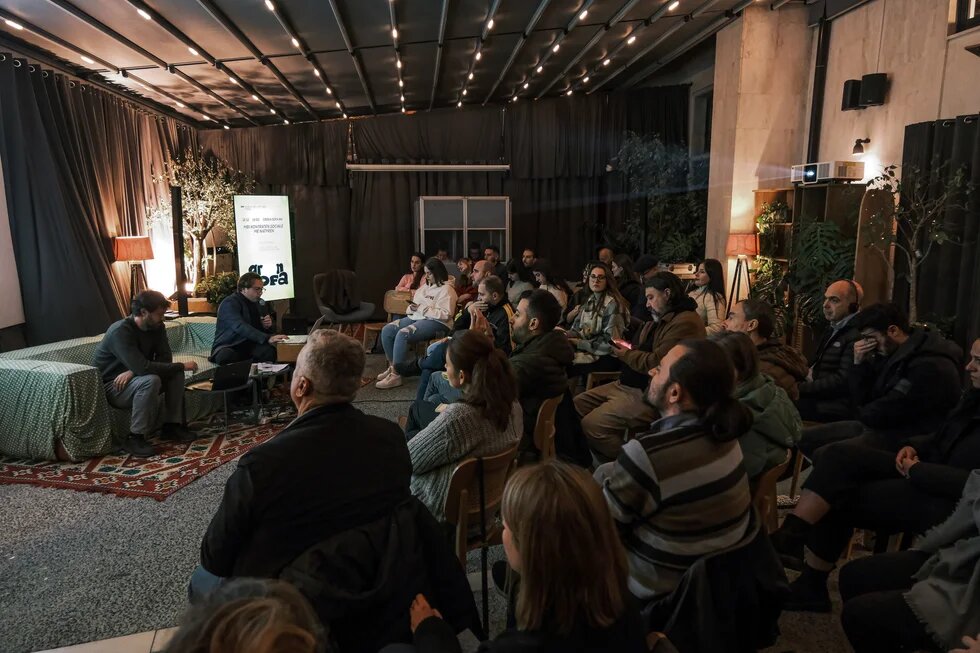
Rather than treating ecological crisis as a technical problem of environmental management, the discussion framed it as a crisis of social relations, democracy, and the relationship between people, institutions, and nature. Revisiting the commons, the village, and the river as sites of collective life, Green Sofa #4 invited participants to reflect on what kind of relationship between society and nature is being produced today, and what alternatives remain possible.








In this sense, the idea of a social contract with nature emerged not as a finished concept or as an abstract philosophical proposition, but as an open political question, one that challenges us to rethink the institutions, values, and relationships shaping our present ecological future. The discussion suggested that answering this question requires rethinking not only our relationship with nature, but also the institutions, values, and forms of collective life through which that relationship is shaped.
We warmly thank everyone who joined us for the Green Sofa conversation series and contributed to such an engaged and thoughtful evening. We look forward to welcoming you again at our upcoming events as we continue creating space for critical reflection and collective discussion around the cultural, social, political, and environmental questions shaping our present.
This conversation does not end here. Many of the ideas and questions raised during the evening are developed further in the publication Anthropology and the Commons, which offers a deeper exploration of the commons, community rights, and human-nature relations.

Assoc. Prof. Olsi Lelaj is an anthropologist and researcher at the Centre for Research in Social and Cultural Anthropology (QSASK) and the Institute of Cultural Anthropology and Art Studies in Tirana. His research focuses on the anthropology of modernity, state formation, knowledge production, and urban transformation in socialist and post-socialist contexts. He is the author of Under the Sign of Modernity: Anthropology of Proletarianization during State Socialism in Albania (2015) and co-author, with Prof. Dr. Nebi Bardhoshi, of Ethnography in Dictatorship: Knowledge, Power, and Our Holocaust (2018).

Prof. Dr. Nebi Bardhoshi is an anthropologist and researcher at the Centre for Research in Social and Cultural Anthropology (QSASK) in Tirana. His work focuses on the anthropology of nature, law, and politics, with particular emphasis on customary law, common property regimes, and state–community relations. He is the author of several monographs, including Border Stones: Customary Law, Ownership, Social Structuration (2011) and An Anthropology of the Kanun (2015), and has taught legal and political anthropology for more than twenty years.