
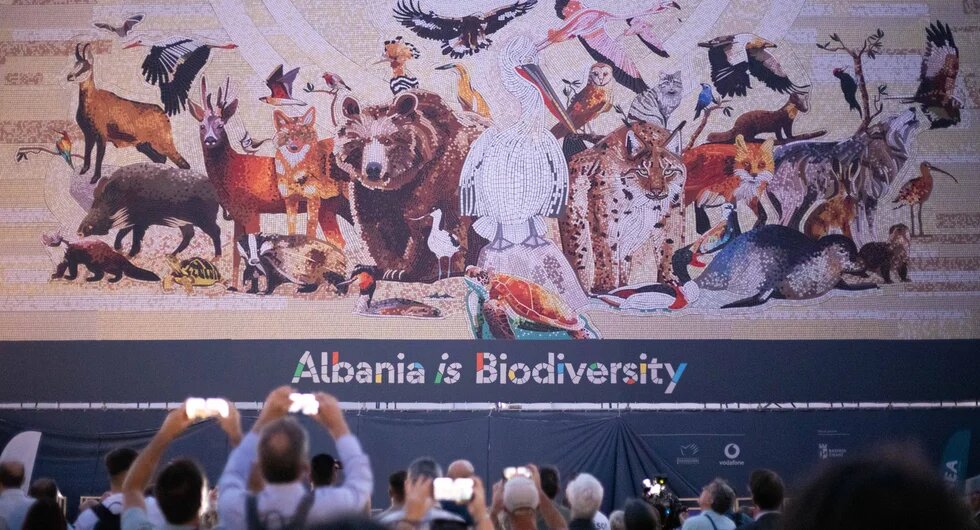
What began as a temporary artistic intervention in Skanderbeg Square is becoming a lasting civic landmark. The “Albania is Biodiversity” mosaic marks the next step in the campaign’s journey—from a public artwork to a long-term initiative that places biodiversity at the center of public life.

The "Albania is Biodiversity" as a Living Campaign
When the Albania is Biodiversity campaign first entered Tirana’s Skanderbeg Square in October 2023, it did so with a clear ambition: to bring biodiversity into the very center of public life. Conceived as a long-term civic and educational campaign by the Heinrich Böll Stiftung Tirana Office in close partnership with the Protection and Preservation of Natural Environment in Albania (PPNEA), the initiative set out to reposition biodiversity protection not as a specialist or technical concern, but as a shared societal and political responsibility.
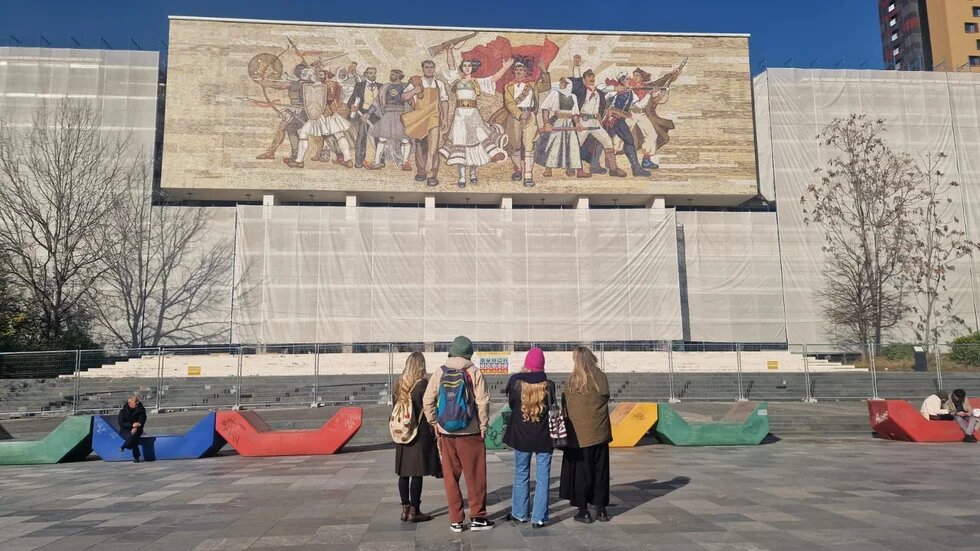
At the heart of this first public installment stood a monumental, mosaic-like image by Albanian artist Kleidi Eski, realized as a large-scale textile banner measuring approximately 30 meters in length and 15 meters in height. Installed adjacent to the iconic socialist-era mosaic “The Albanians” on the façade of the National Historical Museum, the work deliberately entered into dialogue with one of Albania’s most symbolically charged monuments. Where heroic human figures once embodied narratives of progress and collective strength, Eski’s image foregrounded 38 endangered species native to Albania, shifting attention toward vulnerable non-human life and ecological interdependence. For three weeks, the artwork and the accompanying Biodiversity Resource Hub transformed Skanderbeg Square into a space of encounter, learning, and public debate.
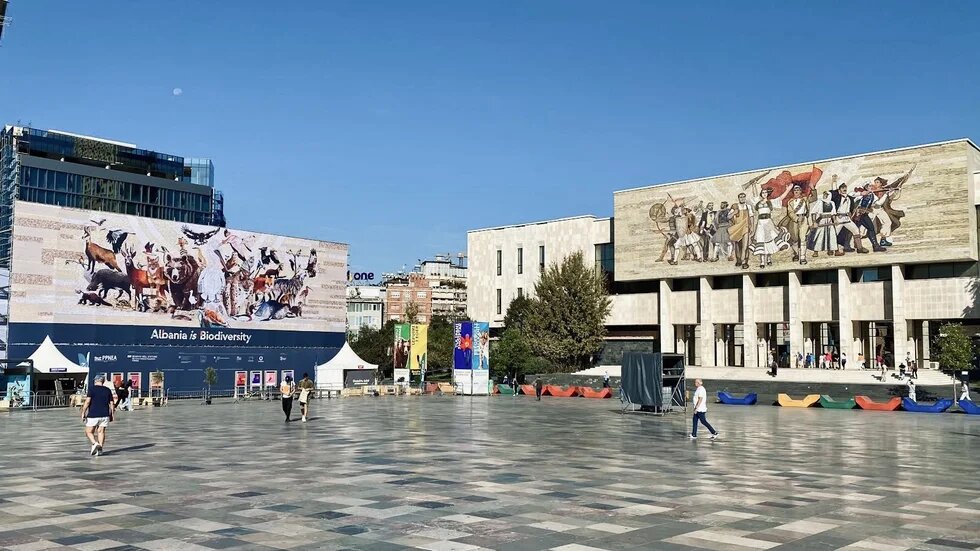
What began as a temporary intervention, however, was never intended to remain ephemeral.
Campaign as process, not event
From its outset, Albania is Biodiversity was conceived as a campaign unfolding over time and across formats. Alongside the public artwork, Albania’s leading nature conservation organization, PPNEA, developed an extensive educational, scientific, and participatory program. Thousands of visitors engaged with the Resource Hub; hundreds of pupils and students participated in guided learning activities; and many young people committed to longer-term volunteering with PPNEA, embedding the campaign within ongoing conservation practice.
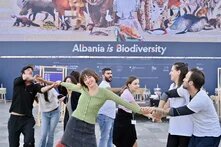
Open Dance Session during Albania is Biodiversity, Tirana, Oct. 2023
Image credits
Visitors at the Info Point of the 'Albania is Biodiversity' Resource Hub, Tirana, Oct. 2023
Image credits
Kids playing at the 'Albania is Biodiversity' Resource Hub, Tirana, Oct. 2023
Image credits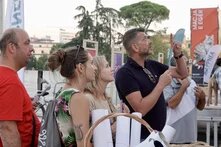
Visitors at the shop of the 'Albania is Biodiversity' Resource Hub, Tirana, Oct. 2023.
Image credits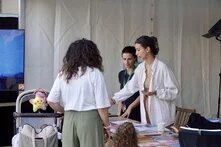
Visitors at the Info corner of the 'Albania is Biodiversity' Resource Hub, Tirana, Oct. 2023.
Image credits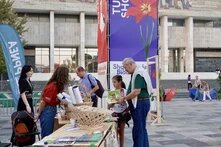
Visitors at the Shop of the 'Albania is Biodiversity' Resource Hub, Tirana, Oct. 2023.
Image credits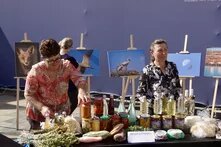
Local vendors at a fair in the 'Albania is Biodiversity' Resource Hub, Tirana, Oct. 2023
Image credits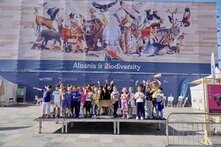
School visit at the 'Albania is Biodiversity' Resource Hub, Tirana, Oct. 2023.
Image credits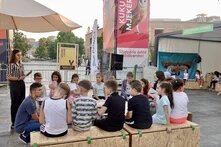
School visit at the Education Corner of 'Albania is Biodiversity' Resource Hub, Tirana, Oct. 2023
Image credits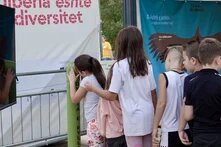
School visit at the Education corner of the 'Albania is Biodiversity' Resource Hub, Tirana, Oct. 2023.
Image credits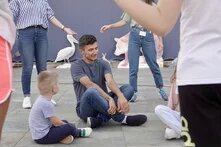
School visit at the 'Albania is Biodiversity' Resource Hub, Tirana, Oct. 2023
Image credits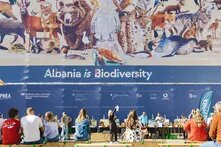
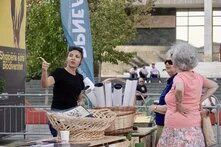
Visitors at the Shop of the 'Albania is Biodiversity' Resource Hub, Tirana, Oct. 2023.
Image credits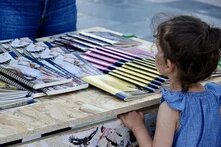
Shop of the 'Albania is Biodiversity' Resource Hub, Tirana, Oct. 2023.
Image creditsFollowing the intervention on Skanderbeg Square, the campaign continued through educational materials distributed to schools across Albania, publications, and sustained outreach activities. In this sense, the mosaic functioned as a communicative anchor: a powerful visual entry point into a broader process of civic education, ecological awareness, and institutional cooperation. It is from this understanding of continuity, of communication as an evolving process rather than a singular moment, that the next phase of the campaign emerged.
From image to material: realizing the mosaic in glass
In spring 2026, the Albania is Biodiversity mosaic will be realized as a mosaic, marking a decisive transition from a temporary public intervention to a long-lasting landmark within the campaign’s long-term civic and educational framework. Produced using eco-friendly, handcrafted glass tesserae from Italy, the mosaic emphasizes durability, care, and material responsibility as political statements in their own right.
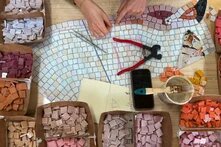
Mosaic artist desk
Image credits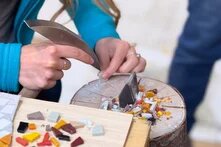
Breaking the tesserae
Image credits
Placing the tesserae
Image credits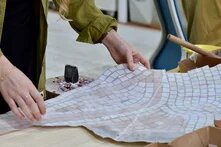
Mosaic print
Image credits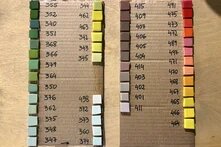
Tesserae
Image creditsThe realization of the mosaic brings together an international team rooted in contemporary mosaic practice. The work is developed by Kleidi Eski in close collaboration with Anna Paola Franceschi, who serves as Lead Mosaicist. The mosaic production team includes Malgorzata Matyla, Marta Matyla, and Umberto Pepe, all graduates of the Scuola Mosaicisti del Friuli (class of 2022). Their collaboration reflects a deliberate emphasis on collective production, intergenerational knowledge transfer, and cross-border cooperation as integral elements of the campaign.
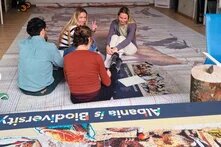
Kleidi, Anna dhe motrat Matyla
Image credits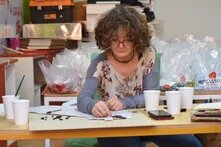
Mjeshtrja udhëheqëse e punës së mozaikut Anna Paola Franceschi
Image credits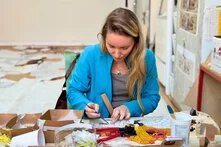
Mjeshtrja e mozaikut Marta Matyla
Image credits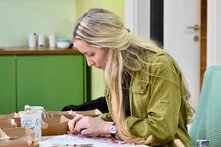
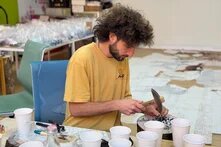
Mjeshtrja e mozaikut Małgorzata Matyla
Mjeshtri i mozaiku Umberto Pepe
Image credits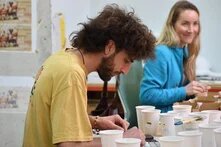
Umberto dhe Marta
Image credits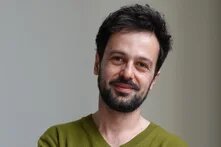
Artisti shqiptar Kleidi Eski
Image credits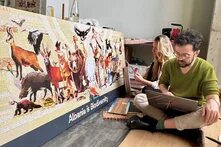
Marta dhe Kleidi
Image creditsThe pavilion on Skanderbeg Square
In spring and summer 2026, the "Albania is Biodiversity" mosaic will be installed in the Temporary Pavilion of the Heinrich Böll Stiftung Tirana Office, once again located on Tirana’s central Skanderbeg Square. Designed as an open and accessible structure, the pavilion functions as a civic platform rather than a closed institutional venue, situating ecological questions at the heart of public life.
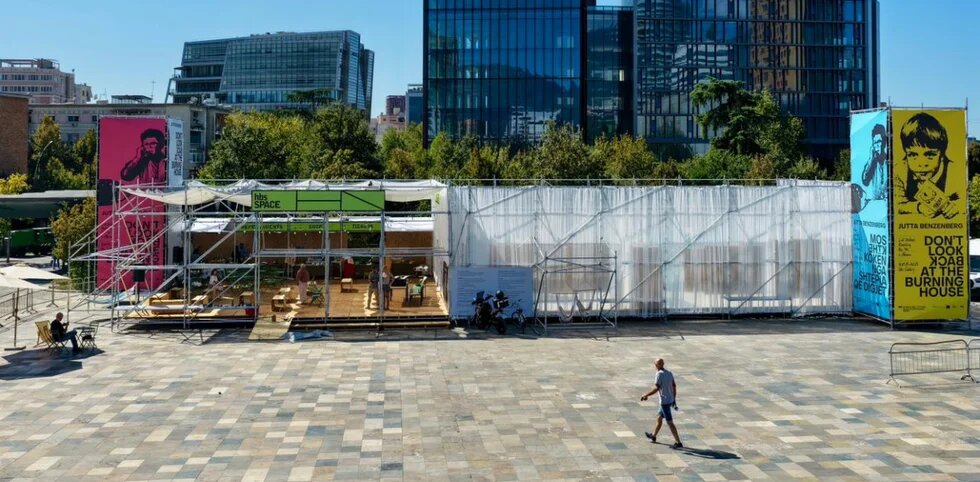
Within this space, the mosaic becomes part of a dynamic infrastructure for dialogue, learning, and civic engagement. Its opening will coincide with the 35th anniversary of PPNEA, celebrating over three decades of conservation work, scientific expertise, and environmental advocacy in Albania. Together with the mosaic, PPNEA will present a comprehensive exhibition and public program, contextualizing the depicted species, their habitats, and the threats they face.
Drawing on its decades-long experience as Albania’s leading nature conservation organization and as a partner of BirdLife International, PPNEA will develop and implement educational, advocacy, and science-based activities tailored to students, educators, civil society actors, decision-makers, and local communities. These programs will highlight concrete pathways for biodiversity protection while reinforcing long-term civic responsibility and ecological awareness.
From 2027 onwards, the exhibition will tour across Albania, extending the campaign beyond major urban centers. In collaboration with PPNEA’s regional networks and local partners, this touring format will open additional spaces for dialogue, learning, and participation, especially in regions most affected by biodiversity loss and environmental pressures.
Activist monuments for the present
In contemporary societies, monuments are increasingly contested. Rather than stabilizing fixed narratives of the past, there is growing interest in forms of public art that invite reflection, learning, and responsibility. The “Albania is Biodiversity” mosaic aligns with this shift.
It does not commemorate conquest or domination; instead, it foregrounds fragility, interdependence, and care.
Installed within a pavilion that hosts discussions, educational formats, and civic encounters, the mosaic functions as an activist monument for the present: one that does not prescribe meaning, but opens space for interpretation, debate, and participation. Its subject, endangered biodiversity, underscores that political decisions shape not only human futures, but the conditions of life itself.
Looking ahead
Through this long-term collaboration, Albania is Biodiversity seeks to strengthen ecological responsibility, societal awareness, and institutional cooperation over time. By combining PPNEA’s conservation practice and advocacy with the Heinrich Böll Stiftung Tirana Office’s civic and political education work, the campaign positions biodiversity protection as a shared political task. It is a task that demands continuity, expertise, and collective commitment well beyond individual events or exhibition cycles.