
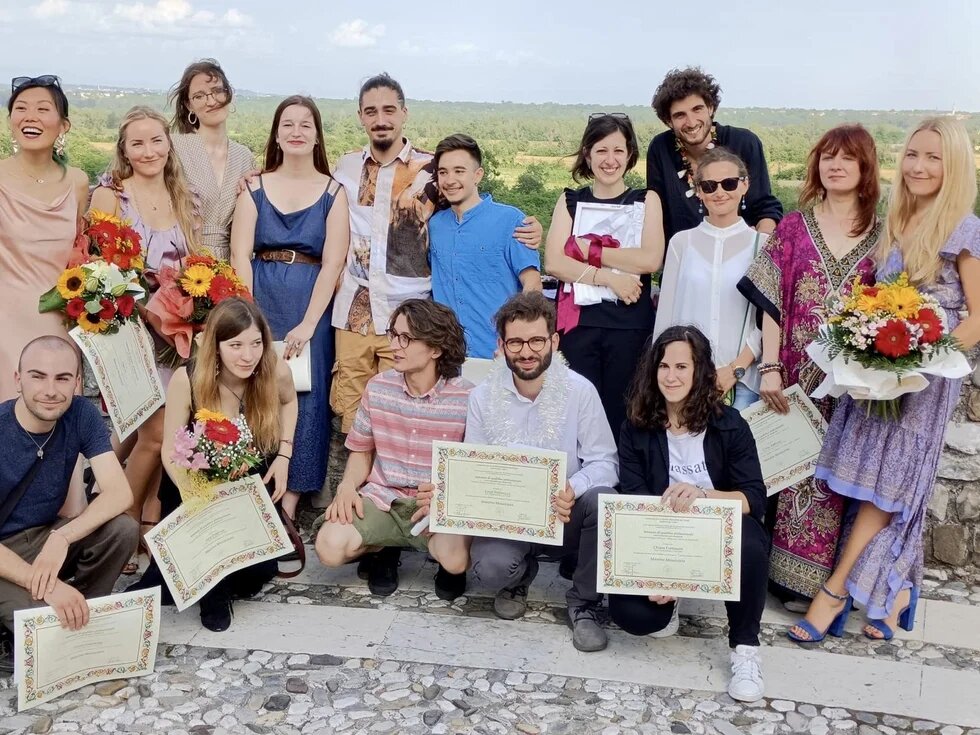
Polish mosaic artist Małgorzata “Gosia” Matyla, a graduate of the Scuola Mosaicisti del Friuli, is currently part of the team creating the “Albania is Biodiversity” mosaic in Albania.

Could you briefly introduce yourself and your work?
My name is Małgorzata Matyla, but everyone calls me Gosia. I am a Polish mosaic artist by profession.
How did you begin working with mosaics?
I have been working with mosaics since graduating from the Scuola Mosaicisti del Friuli in Italy in 2022. Before moving to Albania, I worked in Canada with a company specializing in floor designs and artistic mosaic pieces, primarily using marble. My work ranges from industrial and geometric patterns to artistic mosaics with freer compositions. I also create micro-mosaic jewelry, which is my personal passion.
What drew you to the Albania is Biodiversity mosaic project?
The “Albania is Biodiversity” mosaic project in Tirana captivated me from the very first moment. I feel it is built on strong foundations of love for roots, art, nature, and the values that give meaning to our work. I immediately wanted to be part of it and contribute to a mosaic that educates and remains as a lasting artwork in Albania.
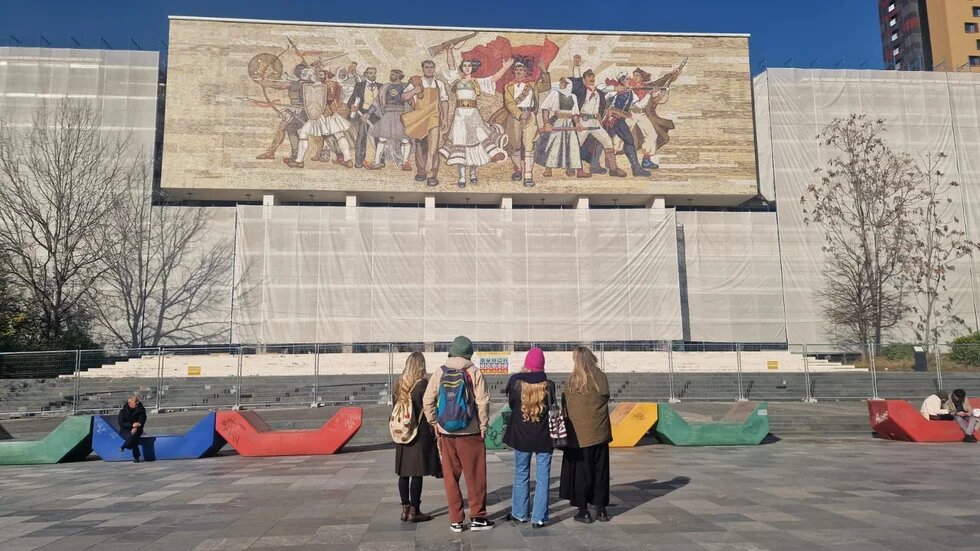
This project seems very personal to you. What does it mean to work on a mosaic dedicated to biodiversity?
I feel deeply connected to nature — I need it. I love moss, water, forests, fresh air, sunlight, flowers, and animals. Creating a mosaic that represents species connected to Albania gives me a strong sense of purpose. I feel grateful and honored to be part of this project.
What does the process of building a mosaic look like?
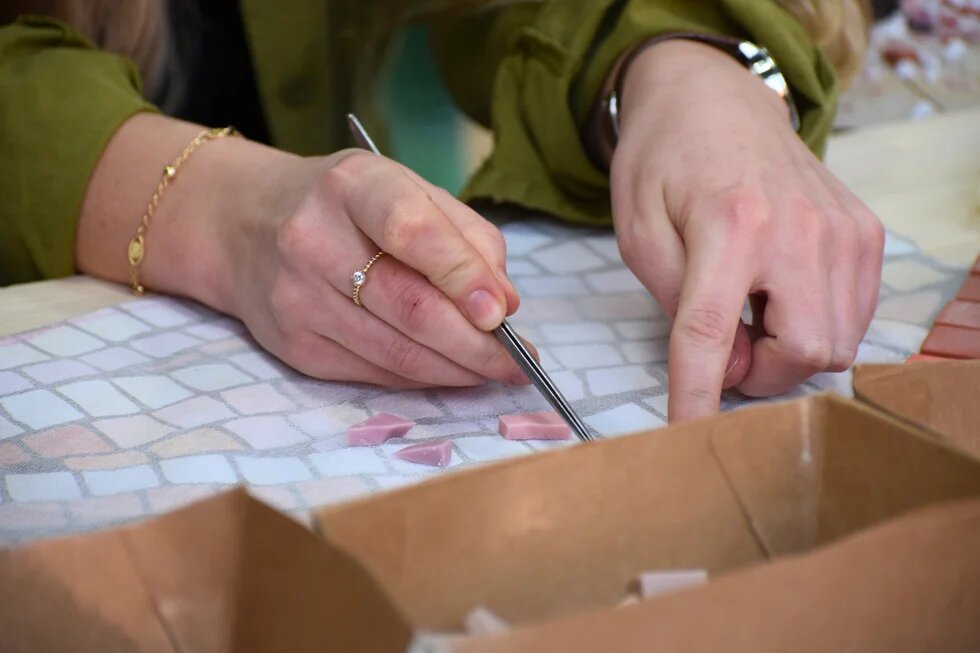
My role here as a mosaic artist is to “build” the mosaic piece by piece, together with my colleagues Umberto and Marta, guided by Anna, who leads the mosaic production, and Kleidi, the artist behind the mosaic image. Every element is handmade and carefully placed. Day by day, the image slowly emerges as each piece is cut, shaped, and set by hand, transforming the design into a living surface.
How is a mosaic of this scale actually made?
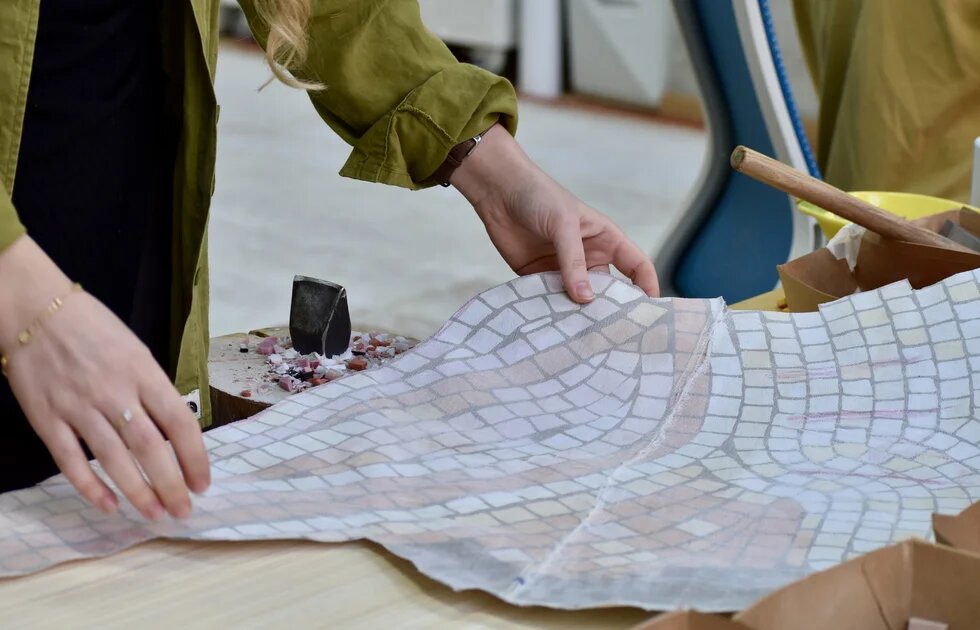
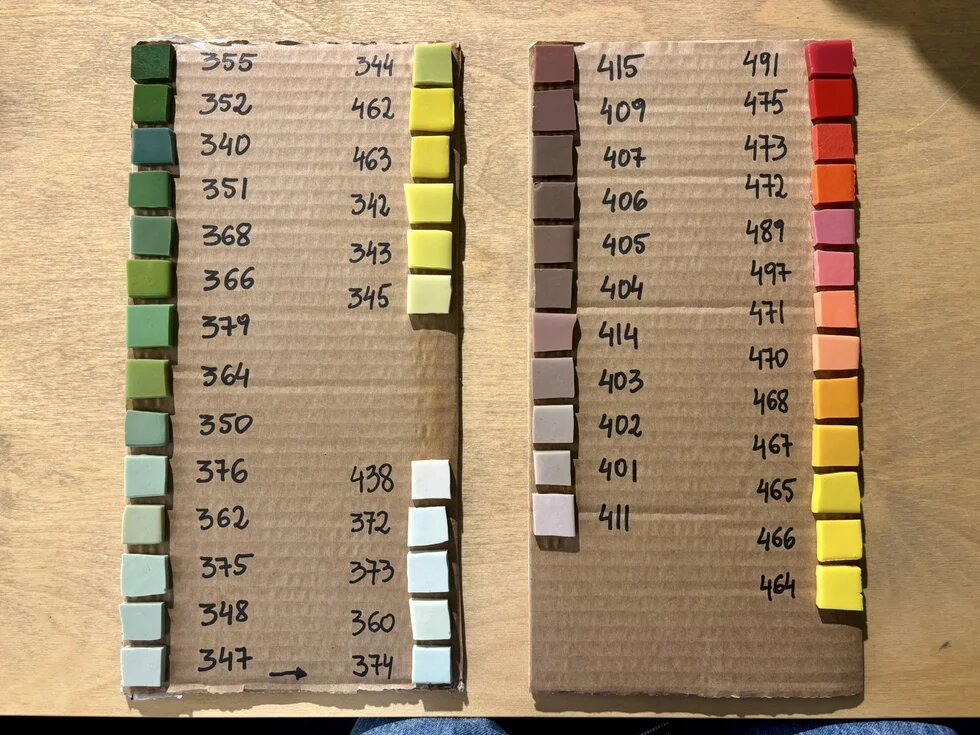
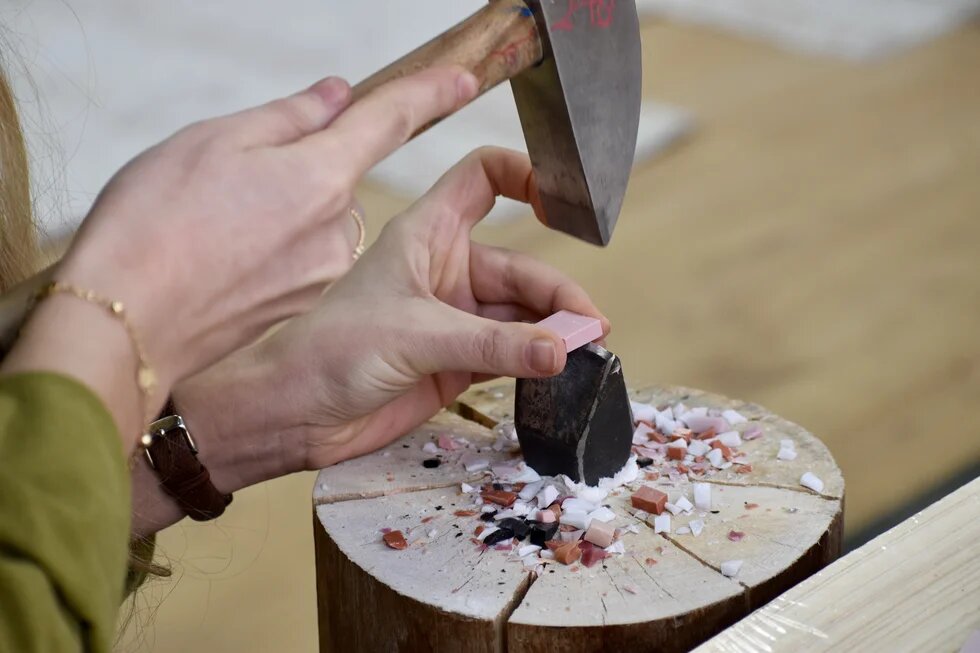
The mosaic process is quite complex. We begin by preparing the full-scale drawing on paper, dividing it into many numbered sections and reinforcing it with cloth. Using the traditional reverse technique, we then build the animals and background by gluing small pieces of glass, called tesserae, onto the paper piece by piece. Once each section is completed, the mosaic is transferred onto specially prepared boards and fixed in place using cement. The work is done using traditional mosaic tools such as the martellina (a mosaic hammer), the tagliolo (a cutting base), as well as tweezers and glass cutters.
What do you hope people feel when they see this mosaic in the future?
I hope that people who see it will stop, smile, and take a moment to admire it. I believe these colorful animals will spark curiosity among both adults and children about the species they represent. My hope is that people will talk about it and share the message about biodiversity, as well as discover the beauty of mosaic art.